
Contents
Polyamide nylon suture is one of the most widely used non-absorbable suture materials in veterinary medicine. Its combination of high tensile strength, smooth monofilament construction, low tissue reactivity, and cost-effectiveness has made it a reliable choice across a broad range of surgical applications in both small and large animal practice. Despite the growing availability of newer synthetic suture materials, nylon surgical sutures remain a cornerstone of external skin closure and several specialized procedures throughout veterinary surgery.
This article examines the properties of polyamide nylon suture in detail, explores its specific clinical applications across different animal species and tissue types, and explains how it compares to other surgical suture material types available to veterinary professionals today.
Polyamide is the chemical classification for the group of synthetic polymers commonly known as nylon. In surgical suture manufacturing, polyamide is produced as either a monofilament or, less commonly, a braided multifilament strand. In veterinary practice, the polyamide monofilament suture form is by far the most widely used because its single-strand construction offers the clinical advantages of smooth tissue passage and reduced bacterial wicking that are critical in skin and other external closure applications.
The polymer chains that make up polyamide nylon are strong, flexible, and resistant to most body fluids and tissue enzymes. This chemical stability is what gives nylon surgical sutures their defining characteristic as a non-absorbable material. Unlike synthetic absorbable sutures that undergo hydrolytic degradation within the body, polyamide nylon resists this breakdown under normal physiological conditions, maintaining its mechanical integrity over extended periods.
Nylon sutures are classified as non-absorbable, meaning they do not degrade through biological processes within the body during the normal post-operative period and must be removed after the wound has healed adequately. This distinguishes them from absorbable options such as polyglactin 910, polyglycolic acid, and polydioxanone. A thorough explanation of this distinction is provided in key differences in absorbable vs non-absorbable sutures every veterinarian should know.
It is worth noting that polyamide nylon does undergo very slow hydrolytic degradation when left in tissue over years, gradually losing a small percentage of its tensile strength. This process is clinically insignificant during the typical post-operative monitoring period but means nylon is not the preferred choice for applications requiring truly permanent internal mechanical support, where polypropylene is generally favored.
Polyamide monofilament suture offers high tensile strength relative to its diameter. This allows practitioners to use a finer gauge suture while still achieving reliable wound support, which is clinically important for minimizing tissue trauma and achieving good cosmetic results, particularly in small animals and in visible anatomical locations.
The smooth surface of polyamide monofilament suture passes through tissue with low friction, reducing tissue drag with each needle pass. This minimizes mechanical trauma at each suture site and is particularly valuable in tissues where repeated passes are required or where tissue integrity is fragile.
The smooth surface also confers resistance to bacterial wicking, one of the most clinically significant properties of monofilament construction. Unlike braided sutures, which contain microscopic interstices where bacteria can migrate and establish biofilm, the sealed surface of nylon surgical sutures resists this phenomenon, making them the preferred choice in wounds where infection risk is a concern.
The structural and clinical advantages of monofilament construction are examined in detail in the advantage of monofilament suture in vet surgical applications.
A notable property of polyamide nylon is its degree of elasticity. Nylon sutures can stretch slightly under tension and recover toward their original dimensions, which allows the suture to accommodate mild post-operative tissue swelling without cutting into wound edges. This elastic behavior reduces the risk of localized tissue ischemia at suture sites during the early post-operative period when swelling is most pronounced.
Polyamide nylon has inherent memory, meaning it tends to return toward its original coiled configuration after manipulation. This property makes nylon sutures slightly more challenging to handle than braided sutures or more pliable monofilaments such as poliglecaprone 25. Additional knot throws are required to achieve reliable knot security with nylon, and practitioners new to the material benefit from deliberate practice to develop consistent technique.
As a synthetic material, polyamide nylon provokes minimal inflammatory response from surrounding tissue. This low reactivity contributes to clean, efficient healing at the suture site and reduces the risk of granuloma formation or persistent inflammatory tracts around individual sutures. This property is particularly valued in visible skin closures where minimizing suture-site reaction supports better cosmetic outcomes.
Property |
Characteristic |
Clinical Implication |
| Structure | Monofilament (primary form) | Low tissue drag, resists bacterial wicking |
| Absorbability | Non-absorbable | Requires removal post-healing |
| Tensile strength | High relative to gauge | Fine sutures can provide strong support |
| Elasticity | Moderate | Accommodates post-operative swelling |
| Tissue reactivity | Low | Minimal inflammation, good cosmesis |
| Knot security | Requires additional throws | Precise technique needed |
| Degradation | Very slow hydrolysis over years | Not for permanent internal use |
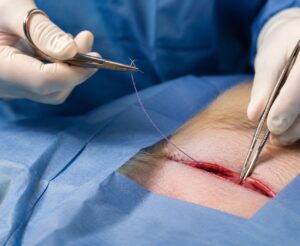
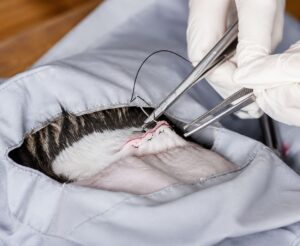
The most common application of polyamide nylon suture in small animal practice is external skin closure. Its smooth surface, low reactivity, and reliable tensile strength make it the standard choice for interrupted and continuous skin closure patterns across a wide range of elective and emergency procedures in dogs and cats.
For routine procedures such as ovariohysterectomy, castration, and mass excision, nylon in a simple interrupted pattern provides secure, easily monitored skin closure. The sutures are placed at the appropriate tension to appose wound edges without strangulating tissue, and removed at 10 to 14 days post-operatively once adequate wound strength has developed.
In areas of higher skin tension, such as over the dorsal midline, over joints, or in large breed dogs with thick skin, nylon in a vertical mattress pattern provides additional tension relief and reduces the risk of suture pull-through or wound edge inversion.
For detailed guidance on selecting the right suture for skin closure in veterinary patients, the guide on how to choose the best sutures for skin closure in vet practice provides a comprehensive clinical reference.
Polyamide nylon suture is a practical choice for laceration repair in small animals, particularly in wounds with contamination risk where the monofilament surface confers a meaningful infection control advantage. In traumatic lacerations and bite wounds, where polymicrobial contamination is common, nylon surgical sutures minimize the risk of bacterial colonization along the suture line.
Suture size selection for laceration repair follows the same principles as elective skin closure, with 3-0 or 4-0 appropriate for cats and small breed dogs, and 2-0 or 3-0 for medium to large breed dogs. The common types of suture for laceration used in veterinary surgery outlines the full range of suture options relevant to traumatic wound management.
Fine-gauge polyamide nylon suture is extensively used in veterinary ophthalmic surgery. The cornea and conjunctiva require suture materials that cause minimal tissue trauma during placement, provoke the lowest possible tissue reaction, and provide precise wound edge apposition in a very small working area.
Nylon in gauges of 6-0 to 8-0 is commonly used for corneal lacerations, corneal grafting procedures, and conjunctival repairs. The fine gauge and smooth monofilament surface of nylon are well suited to the demands of ophthalmic tissue, where even minor suture-induced inflammation can affect visual outcomes and patient comfort.
In selected neurological procedures, nylon sutures are used for dural closure and other soft tissue repairs associated with spinal or intracranial approaches. The low tissue reactivity of polyamide monofilament suture is particularly important in the neurological environment, where inflammatory responses can have serious functional consequences.
While polypropylene is the primary non-absorbable monofilament used in cardiovascular surgery due to its superior long-term stability, nylon is occasionally used in selected cardiovascular applications. Its smooth surface and low tissue reactivity are compatible with the requirements of vascular repair, though for applications requiring genuinely permanent long-term integrity, polypropylene remains the standard.
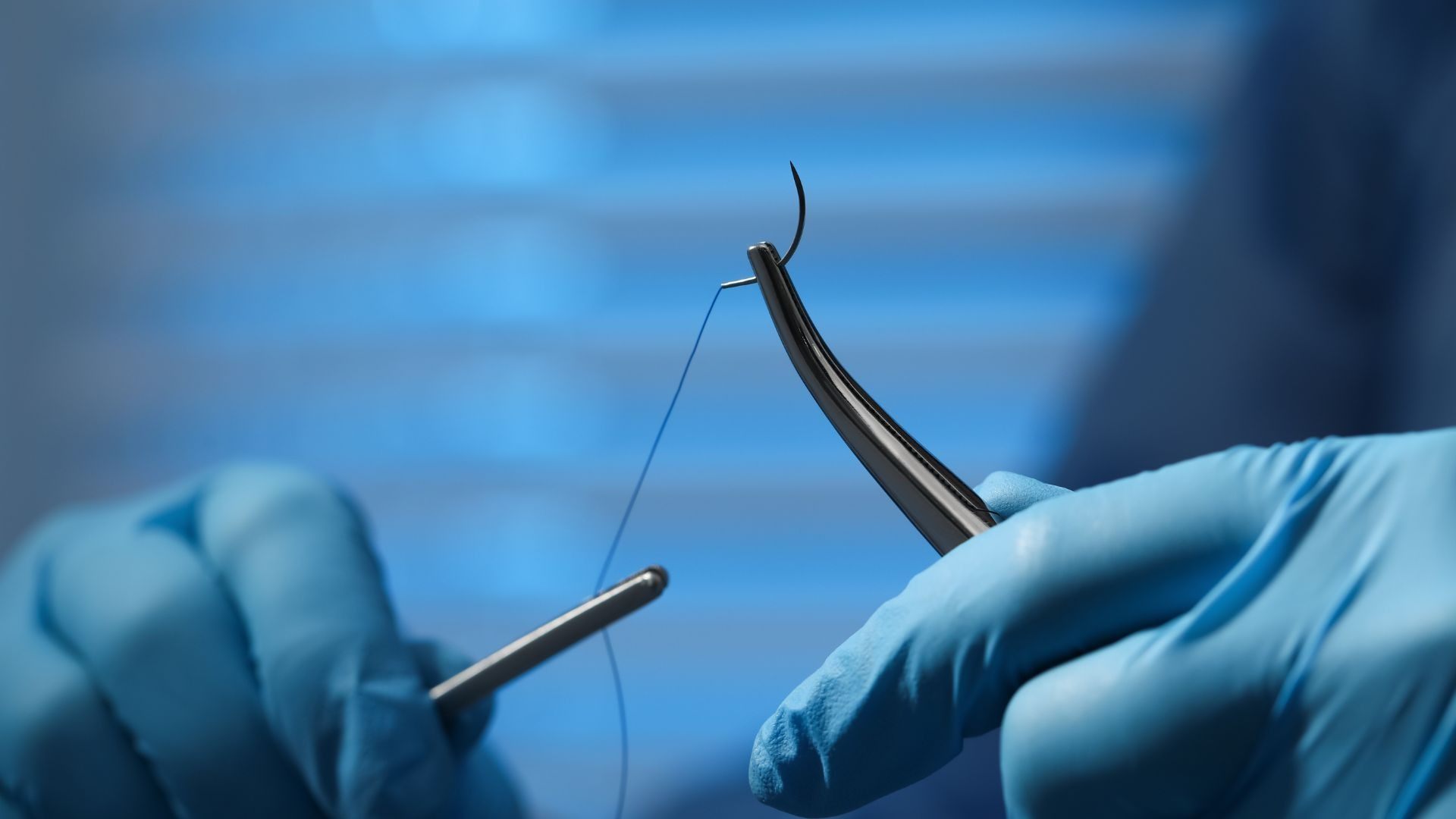
In large animal practice, polyamide nylon suture is used for skin closure across a wide range of elective and emergency procedures. The significantly greater skin thickness and the mechanical forces generated by large animal movement require appropriately sized suture material.
In horses, skin closure following colic surgery, arthroscopy, and wound repair commonly uses nylon in sizes ranging from 0 to 2-0 depending on the location and the tension across the wound. The monofilament surface is particularly valued in equine skin closure because horses are frequently kept in environments with high microbial load, making bacterial wicking resistance an important consideration.
Skin sutures in horses are typically removed at 10 to 14 days, though this timeline may be extended in locations subject to constant movement or tension. Post-operative monitoring of equine skin closures is important because horses may traumatize suture sites through rubbing or biting, requiring protective bandaging in accessible locations.
In cattle and other ruminant species, nylon surgical sutures are used for flank laparotomy closures, caesarean section skin closure, teat surgery, and wound repair. The skin of cattle is thick and resilient, and suture sizes in the 0 to 2 range are commonly used for external closure in these species.
The skin of cattle around wound sites is often heavily contaminated with environmental bacteria, further supporting the preference for monofilament nylon over braided suture materials in external large animal closures.
Polyamide nylon suture has specific applications in equine tendon and ligament sheath repair, where strong, non-absorbable suture material is needed to close sheaths and support repair of dense connective tissue structures. The high tensile strength of nylon in appropriate gauges provides the mechanical support needed for these demanding applications.
Fine-gauge nylon is also used in large animal ophthalmic surgery, including corneal laceration repair in horses and cattle. The same properties that make it suitable for small animal ophthalmic work, precise tissue apposition, low reactivity, and smooth passage, apply equally in the large animal context, though needle and suture design considerations differ for the larger anatomical structures involved.
Both nylon and polypropylene are synthetic monofilament non-absorbable sutures with low tissue reactivity and smooth surfaces. The key differences lie in their long-term stability and handling characteristics.
Polypropylene is more biologically inert over extended periods than nylon, making it the preferred choice for permanent internal repairs such as cardiovascular suture lines. Nylon undergoes very slow degradation over years that is clinically insignificant in the short term but makes it less suitable for truly permanent internal applications.
From a handling perspective, polypropylene has a lower coefficient of friction than nylon, which requires particularly careful knot technique to prevent slippage. Nylon, while also requiring additional knot throws, is generally considered slightly easier to handle than polypropylene in routine skin closure applications.
The comparison between nylon and absorbable monofilament options such as poliglecaprone 25 or polydioxanone centers on whether suture removal is practical and desired.
In patients where a return visit for suture removal is unlikely or where the animal’s temperament makes removal difficult, a subcuticular absorbable suture eliminates the need for removal entirely. In patients where monitoring of the skin closure is straightforward and removal is practical, nylon provides reliable external support with easy removal at the appropriate time.
Braided non-absorbable sutures such as silk and polyester offer superior knot security and easier handling compared to nylon but carry a higher tissue reactivity and infection risk due to their braided construction. In most external skin closure applications, the infection resistance and cosmetic advantages of nylon monofilament outweigh the handling advantages of braided alternatives.
Suture Material |
Type |
Absorbable |
Tissue Reactivity |
Infection Risk |
Best Application |
| Polyamide Nylon | Monofilament | No | Low | Low | Skin closure, ophthalmic, laceration repair |
| Polypropylene | Monofilament | No | Very low | Low | Cardiovascular, permanent internal repair |
| Poliglecaprone 25 | Monofilament | Yes | Low | Low | Subcuticular closure, soft tissue |
| Polyglactin 910 | Braided | Yes | Moderate | Moderate | Subcutaneous, clean internal closure |
| Silk | Braided | No | High | Higher | Oral surgery, specific applications only |
Appropriate gauge selection for nylon surgical sutures follows the same species and tissue-based principles that apply to all surgical suture material types. The smallest adequate size that provides sufficient tensile strength for the tissue and patient should always be selected.
For cats and small breed dogs, 3-0 to 4-0 is appropriate for most skin closure applications. For medium to large breed dogs, 2-0 to 3-0 is standard. For large animals including horses and cattle, sizes ranging from 0 to 2 are commonly used for skin closure. For ophthalmic applications, 6-0 to 8-0 is the appropriate range in most small animal cases.
Full guidance on suture size selection across species and tissue types is provided in how to choose suture size for optimal healing and vet care.
Polyamide nylon sutures are supplied pre-sterilized by manufacturers using validated sterilization methods. Their non-absorbable polymer composition makes them compatible with both ethylene oxide sterilization and some radiation-based sterilization methods. Maintaining the integrity of the sterile packaging through appropriate storage is essential to ensure that the suture remains sterile at the point of use.
Nylon sutures should be stored in cool, dry conditions away from direct light and heat sources. Packaging should be inspected for damage before opening, and any compromised packets should be discarded rather than used. Practices managing their surgical supply inventory can refer to how to maintain medical equipment for long-term reliability for guidance on storage standards.
Polyamide nylon suture occupies a well-established and clinically important position within the range of surgical suture material types available to veterinary professionals. Its combination of monofilament construction, high tensile strength, low tissue reactivity, and broad species compatibility makes it a practical and reliable choice for skin closure and several specialized applications across both small and large animal practice. Understanding when nylon is the right choice, and when an absorbable or alternative non-absorbable material is better suited, is part of the informed suture selection that supports optimal patient outcomes.
Strouden supplies a comprehensive range of nylon surgical sutures and other veterinary suture materials to support consistent, high-quality surgical practice across all species. To explore our full product range or discuss the best suture options for your practice, please contact us today.
A: Polyamide nylon suture is primarily used for external skin closure in small and large animals. It is also used in ophthalmic surgery, laceration repair, neurological procedures, and selected orthopedic and large animal applications requiring strong, non-absorbable monofilament material.
A: Polyamide nylon suture is non-absorbable. It resists enzymatic and hydrolytic degradation under normal physiological conditions and must be removed after adequate wound healing, typically at 10 to 14 days for external skin closure in most veterinary patients.
A: The smooth monofilament surface resists bacterial wicking and causes less tissue trauma during placement. It also provokes minimal tissue reaction, supporting cleaner healing and better cosmetic outcomes compared to braided sutures of equivalent material.
A: In cats and small dogs, 3-0 to 4-0 nylon is standard for skin closure. Medium to large breed dogs typically use 2-0 to 3-0. In large animals such as horses and cattle, sizes from 0 to 2 are commonly used depending on skin thickness and wound tension.
A: Both are smooth monofilament non-absorbable sutures with low tissue reactivity. Polypropylene is more biologically stable over long periods, making it preferred for permanent internal repairs such as cardiovascular surgery. Nylon is widely used for skin closure and external applications where removal is planned.