
Contents
As veterinary surgical techniques continue to advance, newer suture technologies are being adopted alongside traditional materials. Among these developments, barbed sutures have attracted considerable interest for their ability to distribute tension along a wound without requiring knots. A question that comes up regularly among veterinary professionals and students exploring this technology is: do barbed sutures dissolve? The answer depends on the specific type of barbed suture used, and understanding this distinction is essential for applying the technology appropriately in clinical practice.
This article examines what barbed sutures are, how they work, whether and how they dissolve, how they interact with tissue healing stages, and where they fit within the broader toolkit of veterinary surgical instruments and wound closure methods.
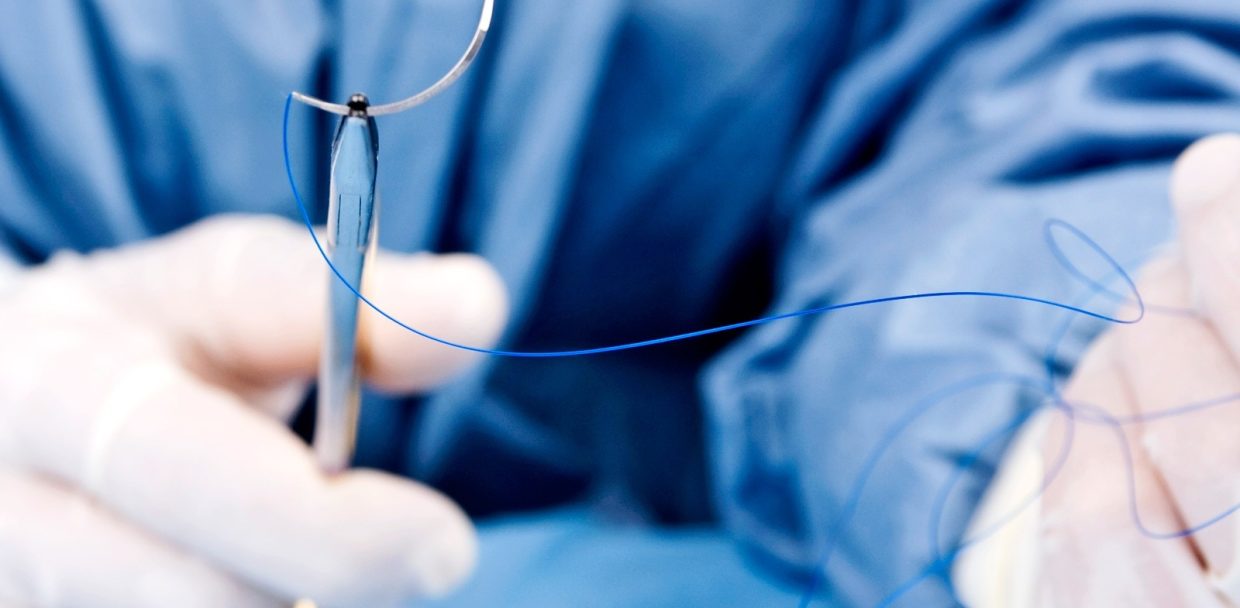
Barbed sutures are surgical threads that feature small cuts or projections along their length, angled in one or both directions. These barbs interlock with surrounding tissue as the suture is passed through, gripping the tissue at regular intervals along the entire suture line rather than relying on knots at the ends to maintain tension. This fundamental difference in mechanical behavior is what distinguishes barbed sutures from conventional smooth surgical sutures.
The barbs function like tiny anchors within the tissue. As the suture is advanced, each barb catches and holds the tissue at that point, distributing tension along the full length of the suture rather than concentrating it at a single knotted location. This distribution of tension reduces the risk of suture pull-through in friable or delicate tissues and can produce more even wound edge apposition across longer incision lines.
Because barbed sutures do not require knots, they eliminate one of the most technically demanding aspects of conventional suturing. Knot security is a consistent concern with smooth sutures, requiring additional throws and precise technique to prevent slippage. Barbed sutures remove this variable from the equation, which can reduce surgical time and simplify the closure process in experienced hands.
The answer to whether barbed sutures dissolve depends entirely on the material from which the specific suture is made. Barbed sutures are available in both absorbable and non-absorbable forms, and the distinction between these two categories determines whether the suture will dissolve within the body or remain as a permanent implant.
Absorbable barbed sutures are made from synthetic polymer materials that undergo hydrolytic degradation within tissue, following the same general mechanism as conventional absorbable dissolvable stitches. The most commonly used absorbable barbed suture in both human and veterinary medicine is made from a copolymer of glycolide, dioxanone, and trimethylene carbonate. This material is designed to retain tensile strength during the critical early healing phases and then degrade predictably over time.
Absorbable barbed sutures retain meaningful tensile strength for approximately three weeks post-implantation. Complete absorption typically occurs within approximately 180 days, following a hydrolytic degradation pathway similar to that of other synthetic absorbable materials. During this period, the barbed structure breaks down along with the suture body, and the degradation products are metabolized and eliminated by the body without accumulation.
This absorption profile makes absorbable barbed sutures suited to internal tissue closures where temporary support is needed and where a permanent foreign body would be undesirable. They are used in subcutaneous closure, subcuticular skin approximation, and selected soft tissue procedures where eliminating knots reduces technical complexity without compromising tissue support.
Non-absorbable barbed sutures are made from synthetic polymer materials that do not degrade within the body, most commonly polypropylene. These sutures remain in the tissue indefinitely, providing permanent mechanical support at the wound site. They are used in applications where long-term or permanent tissue approximation is required, following the same clinical reasoning as conventional non-absorbable sutures.
Because non-absorbable barbed sutures are permanent implants, they are used primarily in applications where lifelong support is the clinical goal. The decision to use a non-absorbable barbed suture must account for the fact that the barbed structure creates a much larger effective surface area of foreign material within the tissue compared to a smooth non-absorbable suture of equivalent gauge.
Understanding the full spectrum of absorbable and non-absorbable suture behavior helps contextualize where barbed sutures fit within clinical practice. The key differences in absorbable vs non-absorbable sutures every veterinarian should know provides a thorough foundation for this comparison.
To use barbed sutures appropriately, it is important to understand how they interact with the sequential tissue healing stages that occur after any surgical wound is created.
In the immediate post-operative period, the barbs are engaged within the tissue and the suture bears most of the mechanical load holding the wound edges together. The inflammatory response to the barbed suture begins at this stage. Like all foreign materials, the suture provokes an immune response from surrounding tissue. The nature and intensity of this response depend on the material composition of the suture. Synthetic absorbable materials provoke a lower inflammatory response than natural materials, and modern barbed suture formulations are designed to minimize tissue reactivity.
The distributed tension across the barbed suture line is clinically advantageous during this phase. Concentrated tension at knot sites, as occurs with conventional sutures, can cause localized ischemia that slows cellular repair. Barbed sutures reduce this localized compression, which may support more uniform healing initiation across the wound length.
During the proliferative phase, fibroblasts begin depositing collagen and new tissue forms across the wound. It is during this phase that the wound progressively gains its own intrinsic tensile strength. For absorbable barbed sutures, the suture continues to provide mechanical support throughout this phase while beginning the early stages of hydrolytic degradation.
The barbs remain engaged in the tissue during the proliferative phase, and the wound edges continue to be held in apposition by the distributed anchoring mechanism. As collagen matures and the wound strengthens, the contribution of the suture becomes less critical. By the time meaningful strength loss in the suture occurs, the tissue has typically developed sufficient intrinsic support to maintain apposition independently.
During the remodeling phase, collagen fibers mature and reorganize, progressively increasing the tensile strength of the healed wound. For absorbable barbed sutures, hydrolytic degradation continues during this phase, and the suture material is gradually broken down and eliminated. The barbed projections degrade along with the suture body, and by the time complete absorption occurs, the wound has long since gained adequate intrinsic strength.
For non-absorbable barbed sutures, the suture remains in the tissue throughout the remodeling phase and beyond, encapsulated by fibrous connective tissue as the body accommodates the permanent implant.
Understanding how suture materials interact with these healing phases is fundamental to selecting appropriate materials for each application, as explored in how long does absorbable sutures last in veterinary procedures.

Barbed sutures have found a growing range of applications in veterinary surgery, driven largely by their potential to reduce surgical time and simplify wound closure in certain contexts.
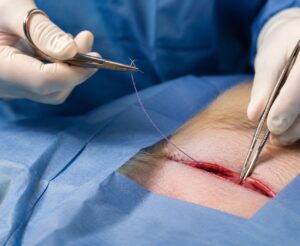
One of the most practical applications of absorbable barbed sutures in veterinary practice is subcutaneous and subcuticular closure. The knot-free design is particularly advantageous here because it eliminates the palpable knot masses that can form beneath the skin with conventional knotted sutures. In thin-skinned patients or in areas where subcutaneous knots may be uncomfortable or visible to owners, this is a meaningful practical benefit.
The subcuticular application of absorbable barbed sutures produces a smooth, buried closure that holds wound edges in precise apposition without surface penetrations. Combined with a small amount of topical adhesive for surface sealing, this approach produces excellent cosmetic outcomes. The complementary role of skin adhesive in this type of closure is discussed in key benefits of vet skin glue for faster healing in pets.
Barbed sutures have been used for body wall closure in veterinary patients, where the running nature of the barbed design allows rapid and secure fascial approximation without the need for multiple knots along the closure line. The distributed tension mechanism may reduce the risk of localized suture pull-through in tissues with variable compliance.
However, the selection of appropriate gauge and absorption profile is particularly important in fascial closure, where mechanical demands are high and healing is slow. Conventional polydioxanone remains the benchmark for fascial closure in most practices, and barbed suture adoption in this application varies between surgical teams.
Barbed sutures are used in a range of veterinary soft tissue procedures including gastropexy for gastric dilatation-volvulus prevention, cystotomy closure, and selected reproductive tract procedures. In these applications, the knot-free design simplifies closure of tubular or rounded structures and reduces the risk of suture handling errors in confined working spaces.
In minimally invasive veterinary surgery, knot tying within the body cavity is technically demanding and time-consuming. Barbed sutures are particularly well suited to laparoscopic closure because they can be advanced and secured without the need for intracorporeal knot tying. As minimally invasive techniques become more widely adopted in veterinary practice, barbed suture use in these contexts is expected to grow.
As part of the broader collection of veterinary surgical instruments and materials, barbed sutures offer several practical advantages that explain their growing adoption.
Elimination of knots removes a potential point of failure and reduces the technical time spent on knot placement and security verification. In longer closures, this can meaningfully shorten the total surgical time, which benefits the patient by reducing anesthetic duration.
Distributed tension along the barbed suture line produces more even tissue apposition compared to conventional sutures, where tension is concentrated at each knot. This more uniform distribution may reduce localized tissue ischemia and support more consistent healing across the wound.
The simplified technique associated with barbed sutures can reduce the learning curve for certain closure patterns, making reliable closure more accessible in procedures where knot tying in deep or confined spaces is a consistent technical challenge.
While barbed sutures offer genuine advantages in appropriate applications, veterinary professionals should also be aware of their limitations.
Barbed sutures are generally not suitable for use as ligatures because the anchoring mechanism relies on tissue engagement along the suture length rather than at a fixed knotted point. Ligating a vessel or pedicle requires the secure, localized holding force of a knot, which barbed sutures are not designed to provide.
The barbed structure also makes the suture difficult or impossible to remove once placed, because the barbs engage tissue in the direction opposite to withdrawal. This is not a concern for absorbable barbed dissolvable stitches used internally, but it is an important consideration in any application where suture removal might become necessary.
Cost is another consideration. Barbed sutures are generally more expensive than conventional smooth sutures of equivalent material. This may influence adoption decisions in practices managing tight supply budgets, though the reduction in surgical time may offset some of the cost difference in high-volume procedures.
Tissue reaction to barbed sutures should also be considered. The barbed projections increase the surface area of suture material in contact with tissue, which can amplify the foreign body response compared to an equivalent smooth suture. In most healthy patients this is clinically insignificant, but in compromised or immunodeficient animals, minimizing the suture-tissue interface remains a consideration.
Barbed sutures are one tool among several available for wound closure in veterinary practice. They do not replace conventional sutures in most applications but offer a meaningful alternative in specific clinical contexts where their properties provide a genuine advantage.
Conventional smooth sutures in both braided and monofilament forms, topical skin adhesives, and disposable skin staplers all continue to play important roles in comprehensive wound management. The guide to the different types of veterinary surgical sutures provides an overview of the full range of available materials.
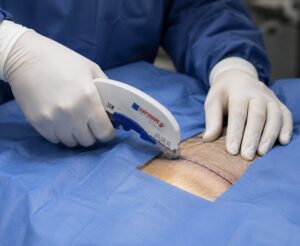
For external skin closure following internal barbed suture application, options including monofilament skin sutures, subcuticular patterns, staples, and skin adhesive each serve specific purposes. The use of disposable staplers for efficient skin closure is discussed in benefits of using sterile disposable skin staplers in veterinary practice.
So, do barbed sutures dissolve? The answer is that it depends on the material. Absorbable barbed sutures degrade through hydrolysis over approximately 180 days, providing temporary internal support before dissolving completely. Non-absorbable barbed sutures remain as permanent implants. In both forms, barbed sutures offer the clinically meaningful advantage of knot-free closure with distributed tension across the wound line, making them a valuable addition to the veterinary surgical toolkit when used in appropriate applications.
Understanding how barbed sutures interact with tissue healing stages, where they are most clinically useful, and where conventional suture approaches remain preferable allows veterinary professionals to integrate this technology thoughtfully into their surgical practice.
Strouden supplies a comprehensive range of veterinary surgical sutures and wound closure products to support informed, high-quality surgical practice. To explore our product range or discuss suture solutions suited to your clinical needs, please contact us today.
A: It depends on the material. Absorbable barbed sutures dissolve through hydrolysis over approximately 180 days, providing temporary wound support before degrading completely. Non-absorbable barbed sutures remain permanently in the tissue as stable implants, similar to conventional non-absorbable sutures.
A: Absorbable barbed sutures typically retain meaningful tensile strength for approximately three weeks post-implantation. This timeframe supports the wound through the critical early tissue healing stages before the suture begins to lose mechanical strength as hydrolytic degradation progresses.
A: No, barbed sutures are not appropriate for vessel ligation. Their anchoring mechanism relies on tissue engagement along the suture length rather than a fixed knotted point, which does not provide the localized, secure holding force needed for reliable hemostatic ligation during surgery.
A: Barbed sutures have a larger effective surface area in contact with tissue due to the barbed projections, which can amplify the foreign body response slightly. In most healthy veterinary patients this difference is clinically minor, but it is a consideration in immunocompromised or debilitated animals.
A: Barbed sutures eliminate knot tying, which reduces surgical time and removes a potential point of suture failure. Their distributed tension mechanism produces more even wound edge apposition and reduces localized tissue ischemia at knot sites, supporting more uniform healing across the closure line.