

Contents
Wound closure is one of the most important steps in veterinary surgery, directly influencing how efficiently animals recover and how well tissues reconnect during the healing phases. In modern small-animal and large-animal practice, disposable skin stapler use has become increasingly preferred because it reduces surgical time, promotes consistent closure, and supports streamlined postoperative care. Unlike traditional sutures, which may vary in tension and placement, stapling systems create precise, uniform approximation across an incision. This standardization minimizes complications and contributes significantly to predictable recovery outcomes.
As veterinary surgical equipment continues to advance, clinics rely more on closure devices that reduce contamination risks, simplify workflow, and enhance patient comfort. A disposable skin stapler or veterinary medical stapler serves as a sterile, single-use closure device engineered to support smooth wound alignment without introducing unnecessary trauma. It is especially valuable in soft-tissue procedures, orthopedic cases, and routine surgeries such as canine spay surgery, where consistent wound edges improve both functional healing and cosmetic appearance.
This guide explains how skin staplers contribute to faster healing, how they reduce complications such as dehiscence, how they interact with tissue healing phases, and why their use has become essential in veterinary medicine.
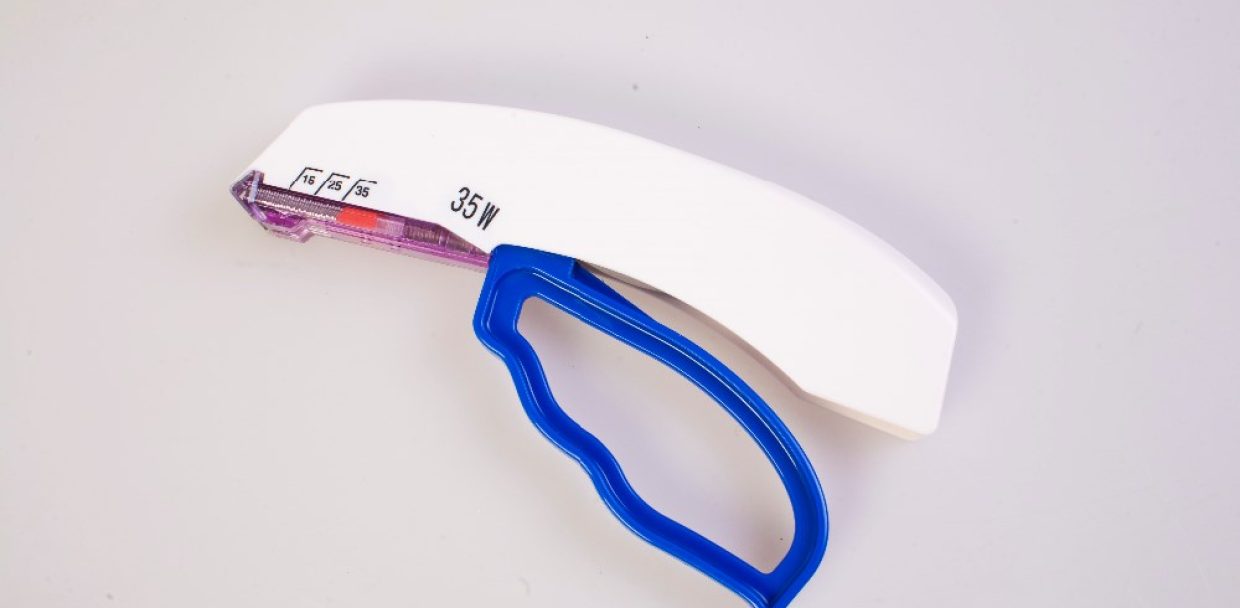
A skin stapler or medical staple gun is part of a category of wound closure tools that mechanically place metal staples across an incision. The mechanism ensures precise depth and width, allowing the epidermis and dermis to align without excessive compression. The staples remain in place until a sterile staple remover is used for atraumatic removal.
Because they are designed for rapid placement, staplers significantly reduce operative duration, which is a strong advantage for animals under anesthesia. Their ease of use and reliable deployment give surgeons predictable results, even in challenging surgical fields.
Using a stapler allows wound edges to be approximated much faster than with traditional suturing techniques. This efficiency reduces anesthesia exposure, shortens operative time, and limits patient stress, ultimately supporting improved post-operative recovery.
Staples penetrate the skin cleanly and uniformly, decreasing unnecessary manipulation. This precise design reduces tissue trauma, which is especially beneficial in sensitive or swollen surgical sites. Minimal trauma often results in smoother healing and less inflammation.
Uniform spacing and tension are essential for preventing dehiscence. A surgical stapler produces consistent closure along the full length of the incision, which supports even load distribution and lowers the risk of uneven healing.
A shorter procedure time and reduced tissue handling help protect animals from surgical site infection. Because staplers require fewer repeated instrument insertions, they limit the potential for contamination.
Skin staples can be used in simple linear closures, high-tension areas, or procedures with large incisions. Their adaptability makes them ideal for clinics seeking dependable closure devices for routine and emergency work.
Healing progresses through predictable stages, and closure security affects each one.
Staples minimize exposed surface area at the incision line, reducing contamination risk. Uniform alignment controls early swelling and encourages clean scab formation.
Fibroblasts migrate efficiently across well-aligned wound edges, promoting faster collagen deposition. Consistent approximation supports stable epithelial advancement.
A clean, well-supported incision undergoes remodeling with fewer irregularities. Veterinary patients benefit from smoother scar formation and reduced tension across the incision.
The predictable behavior of staples in these tissue healing phases explains why disposable skin stapler use is popular for surgical reliability and reduced complication rates.
Traditional instruments require autoclaving, inspection, and verification using chemical indicators and biological controls. Single-use staplers eliminate the need for sterilization systems, lowering processing errors and reducing staff workload.
Practices rely on consistent access to premium surgical supplies. Disposable staplers simplify inventory planning and maintain cost predictability within a clinic’s standard operating procedures.
There is no risk of mechanical degradation, misfires, or hinge deterioration because each stapler arrives preloaded and sterile.
A single-use stapler ensures immediate readiness without concerns over incomplete instrument maintenance, failed autoclave cycles, or damaged components.
Surgeons often use staples to close canine spay incisions, providing strong reinforcement that protects against early movement and supports reliable abdominal healing.
Orthopedic procedures involve large incisions that require durable closure, and skin staplers help maintain proper alignment during postoperative swelling and patient movement.
Staples are extremely useful for long or irregular traumatic lacerations, allowing veterinarians to achieve rapid and consistent closure in urgent situations.
Large animals such as horses and cattle benefit from stapled closures due to their superior durability and ability to withstand significant tissue tension.
Consistent and evenly distributed tension along the incision line significantly lowers the risk of wound separation during recovery, helping maintain stable tissue approximation throughout the healing period.
Because skin staplers minimize tissue handling and allow for rapid closure, they reduce the window of bacterial exposure, which in turn decreases the likelihood of postoperative infection.
Evenly spaced staples promote balanced collagen formation and steady wound contraction, contributing to predictable healing and reducing the chance of irregular scarring or uneven tissue remodeling.
Using a sterile staple remover ensures smooth, controlled extraction of staples with minimal discomfort, supporting the final healing stages and helping prevent unnecessary tissue irritation.
After staples are placed, it is important to keep the incision clean using veterinary-approved cleaning solutions while monitoring for any redness, warmth, or irritation. Restricting the animal’s movement is essential, as running, jumping, or stretching can place unnecessary tension on the incision and compromise healing. Maintaining a controlled environment helps ensure that the wound remains stable during the early recovery period.
Ongoing monitoring is critical for detecting potential complications such as swelling, discharge, or pain around the staple line. Early intervention prevents these issues from progressing into more serious problems. In most cases, staples are removed between 10 and 14 days after surgery, although the exact timeline depends on the procedure and incision location.
Also explore this guide on Best Practices To Remove Surgical Staples From Animal Wounds.
Disposable skin stapler use has become an essential element of modern veterinary surgical care, offering speed, precision, and predictable healing for pets. By lowering tissue trauma, reducing infection risk, and promoting uniform wound closure, skin staplers improve outcomes across a wide range of clinical procedures.
Strouden supports veterinary practices with high-quality closure solutions including the Assut Europe Disposable Skin Stapler, engineered as a sterile, single-use closure device designed for efficiency, consistency, and superior healing support.
Discover Strouden’s dependable surgical closure tools today and elevate healing outcomes for every patient.
Veterinarians choose staples when rapid closure, consistent approximation, and reduced tissue handling are priorities. Staples require less anesthesia time, decrease trauma at the incision line, and support strong healing in areas with movement or tension.
A disposable skin stapler is used to close surgical incisions quickly and uniformly. It provides secure skin alignment during healing, minimizes contamination risks, and supports efficient workflow in both routine and emergency veterinary procedures.
Most staple closures heal sufficiently within 10 to 14 days, depending on incision location and patient activity. During this time, owners must restrict movement and monitor for swelling, drainage, or irritation at the staple line.
The primary advantage is rapid application, which reduces anesthesia duration and tissue trauma. Staples provide consistent closure tension, lowering dehiscence risk and supporting predictably smooth healing outcomes across different surgical procedures.


