
Contents
Understanding how to sterilize suture material and maintain that sterility through to the point of use is a fundamental responsibility in veterinary surgical practice. Sutures are implanted directly into living tissue, and any contamination introduced through a compromised sterilization process or a breach in sterile packaging has the potential to cause surgical site infections, delayed healing, and serious patient harm. While most modern vet sutures arrive pre-sterilized from manufacturers, veterinary teams must understand both the sterilization methods used and the protocols required to preserve sterility throughout storage and handling.
This article covers the science and practice of suture sterilization, the standards that reliable suture suppliers should meet, and the specific steps veterinary practices can take to ensure that every suture placed in a patient is genuinely sterile at the time of use.
A suture that has been contaminated at any point between manufacture and implantation carries microorganisms directly into the surgical wound. Unlike contamination from the external environment, which the skin barrier partially limits, contamination introduced through the suture itself is deposited deep within the tissue where immune defenses have limited reach and where conditions can favor bacterial proliferation.
Surgical site infections linked to non-sterile suture material are difficult to treat because the bacteria are often protected within the wound or along the suture itself. In braided suture constructions, bacterial biofilm can establish within the filament interstices, making antibiotic penetration particularly challenging. In many cases, resolution requires suture removal and secondary wound management, significantly extending the patient’s recovery.
The importance of consistently sterile sutures to veterinary patient safety and clinical trust is discussed in the importance of medical supplies in building trust.
Commercially produced vet sutures are classified as sterile medical devices and must meet the sterilization standards set by applicable regulatory bodies in their country of manufacture. Reputable suture suppliers validate their sterilization processes against internationally recognized standards, providing a sterility assurance level that confirms the probability of a non-sterile unit reaching the end user is extremely low. Purchasing from verified, compliant suture suppliers is therefore the first and most important step in ensuring suture sterility.
The most widely used method for sterilizing commercially produced suture material is ethylene oxide gas sterilization, often abbreviated as EO or EtO sterilization. This method is favored because ethylene oxide is highly effective at penetrating packaging materials and killing a broad spectrum of microorganisms including bacteria, spores, viruses, and fungi, without the heat required by steam-based methods.
Many suture materials, particularly synthetic absorbable sutures such as polyglactin 910, polyglycolic acid, and polydioxanone, are sensitive to the heat and moisture of steam sterilization. High temperatures can alter the polymer structure of these materials, affecting their tensile strength, absorption profile, and handling characteristics. Ethylene oxide operates at low temperatures, typically between 30 and 60 degrees Celsius, making it compatible with heat-sensitive suture materials.
Sutures are packaged in their final configuration and exposed to ethylene oxide gas within a sealed chamber under controlled temperature and humidity conditions. The gas penetrates the packaging and contacts all surfaces of the suture. Following exposure, the sutures undergo an aeration period to allow residual ethylene oxide to dissipate to safe levels before the products are released for distribution. This aeration phase is critical and is specified by the manufacturer as part of the validated sterilization process.
Gamma irradiation is another method used for sterilizing some vet sutures and surgical materials. High-energy gamma rays penetrate packaging and suture material, disrupting the DNA of microorganisms and rendering them incapable of reproduction. This method is effective against a broad range of organisms and does not require heat or chemical agents.
Gamma irradiation is well suited to materials that are stable under radiation exposure. However, some suture polymers can be affected by high radiation doses, potentially altering mechanical properties. Manufacturers validate the dose and exposure parameters to ensure sterilization effectiveness without compromising material integrity. Gamma-irradiated sutures are clearly identified as such on their packaging.
Electron beam, or e-beam, sterilization uses accelerated electrons rather than gamma rays to achieve microbial kill. It is faster than gamma irradiation and produces less residual radioactivity in treated materials. It is used for some suture products and other medical devices where rapid processing and minimal material impact are priorities.
Method |
Temperature |
Suitable For |
Key Advantage |
Limitation |
| Ethylene Oxide (EO) | Low (30-60°C) | Most suture materials | Penetrates packaging, broad spectrum | Requires aeration period |
| Gamma Irradiation | Ambient | Radiation-stable materials | No heat, no residue | Can affect some polymers |
| Electron Beam | Ambient | Radiation-stable materials | Fast processing | Limited penetration depth |
| Steam Autoclave | High (121-134°C) | Heat-stable non-absorbable sutures | Well established | Degrades absorbable polymers |
This is a question that arises in veterinary practice, particularly when a suture is accidentally contaminated during opening or when a partially used packet remains. The general answer is that most commercially produced suture materials should not be re-sterilized in practice unless the manufacturer explicitly validates and permits a specific re-sterilization method for that product.
Re-sterilization of suture material in a clinical setting poses several risks. Steam autoclaving at the temperatures required for effective sterilization will degrade absorbable synthetic suture polymers, altering their tensile strength and absorption profile in unpredictable ways. The resulting suture may appear intact but perform differently from its original specification.
Even for non-absorbable materials that are more heat tolerant, re-sterilization in practice does not achieve the validated sterility assurance level of commercial sterilization because clinical autoclaves are not subject to the same rigorous validation protocols as commercial processes. Re-sterilization also does not restore the integrity of compromised packaging.
If a suture is contaminated during opening, the correct action is to discard it and open a replacement. If suture inventory management is leading to waste from opened packets, the solution is improved inventory planning rather than re-sterilization. Guidance on managing veterinary surgical supplies efficiently is available in the guide to buying wholesale medical supplies.
For a broader overview of sterilization standards relevant to veterinary practice, how to sterilize medical equipment provides practical guidance across different equipment and supply categories.
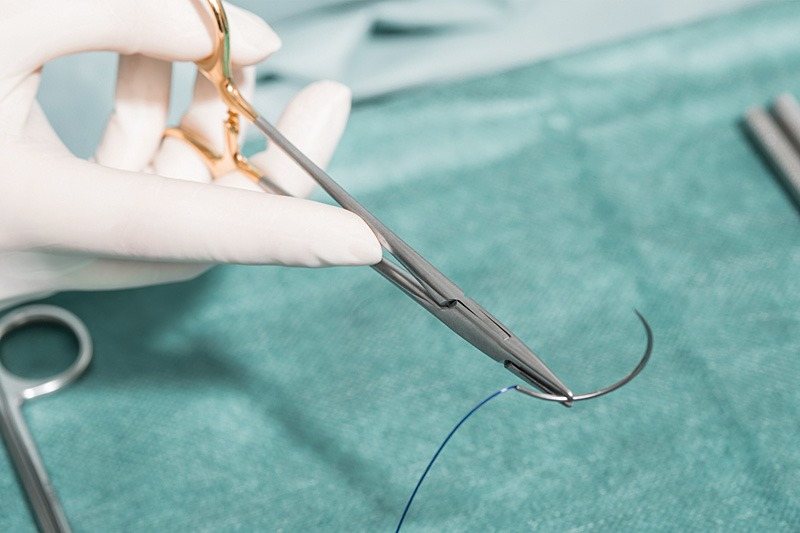
Commercial sterile sutures are packaged in validated sterile barrier systems designed to maintain sterility through the expected shelf life of the product. These packaging systems typically consist of an inner peel pouch and an outer protective layer. The sterile barrier is what preserves the sterility of the suture after it leaves the manufacturer’s sterilization chamber.
Any breach in this packaging, whether from physical damage, moisture exposure, or improper storage, compromises the sterile barrier and should be treated as a contamination event. A suture in damaged packaging should not be used regardless of whether the suture material itself appears intact.
Every suture packet should be visually inspected before opening. Practitioners should check for tears, punctures, moisture staining, discoloration, or any sign that the seal has been compromised. Packets that show any of these signs should be discarded. This inspection takes only seconds and is a critical final check before a suture enters the sterile field.
Suture materials should be stored within the temperature and humidity ranges specified by the manufacturer, typically found on the product label or package insert. Excessive heat can accelerate degradation of absorbable suture polymers and may compromise packaging integrity over time. High humidity can weaken paper-based sterile barrier components and promote microbial growth on packaging surfaces.
Storage areas should be cool, dry, and away from direct sunlight. Sutures should not be stored near autoclaves, sinks, or other sources of heat and moisture. Refrigeration is required for some specific suture products, and this requirement will be stated clearly on the packaging.
Some suture materials are sensitive to ultraviolet light, which can degrade polymer chains and affect tensile strength. Sutures should be stored in conditions that limit direct light exposure, and opaque storage containers or closed cupboards are preferable to open shelving under fluorescent lighting.
A first-in, first-out stock rotation system should be applied to suture inventory to ensure that older stock is used before newer stock. This prevents sutures from approaching their expiry date unnoticed. Expiry dates should be checked during routine inventory reviews and any expired sutures should be removed from use immediately.
Practices looking to streamline their suture inventory management can benefit from reviewing how to maintain medical equipment for long-term reliability.
The way a suture packet is opened directly affects whether the sterile suture inside remains uncontaminated as it enters the surgical field. The outer packaging should be peeled back by an unscrubbed team member, allowing the sterile inner packet or suture to fall or be presented to the scrubbed surgeon without contact between the outer packaging and the sterile field.
Common errors in suture opening include tearing the outer packet in a way that contaminates the inner contents, touching the suture with ungloved hands, allowing the suture to contact the outer packaging as it is removed, and opening sutures too early before they are needed, leaving them exposed on the sterile field for extended periods.
Once a suture is opened and on the sterile field, it should be used promptly. Sutures left exposed for extended periods risk environmental contamination from airborne particles, inadvertent contact with non-sterile surfaces, or drying out in materials where moisture content affects handling. Good surgical workflow management minimizes the time between suture opening and use.
Reputable suture suppliers validate their sterilization methods against recognized international standards. This validation includes biological indicator testing, dose mapping for radiation-based methods, and ongoing monitoring of sterilization parameters. A reliable supplier can provide documentation of their sterilization validation on request.
Commercial sterile sutures should meet a sterility assurance level of 10 to the power of negative six, meaning the probability of a non-sterile unit being present in the finished product lot is no greater than one in one million. This is the standard applied to sterile medical devices in most regulatory frameworks and is the benchmark that veterinary professionals should expect from their suture suppliers.
Reliable suture suppliers perform real-time and accelerated aging studies to validate the shelf life stated on their products. The packaging is tested to confirm it maintains the sterile barrier throughout this period under normal storage conditions. Purchasing sutures from suppliers who have performed this validation provides confidence that the stated expiry date reflects genuine packaging performance.
In the event of a product quality concern, the ability to trace a suture back to its manufacturing lot, sterilization run, and distribution chain is essential for effective recall management. Reputable suppliers maintain this traceability and include lot numbers on every package. Veterinary practices should record the lot numbers of sutures used in surgical procedures as part of their patient records, enabling rapid identification of affected cases if a quality issue is identified.
For practices evaluating their current suture suppliers against these standards, the importance of medical supplies in building trust outlines the broader quality expectations that should guide supplier relationships in veterinary medicine.
Absorbable sutures including polyglactin 910, polyglycolic acid, poliglecaprone 25, and polydioxanone are all supplied as pre-sterilized products from reputable manufacturers. Their heat sensitivity makes ethylene oxide the standard sterilization method for most of these materials. Maintaining their sterility through appropriate storage and handling is particularly important because these sutures are used internally, where any contamination is deposited in tissues with limited direct access for treatment.
Non-absorbable sutures such as nylon, polypropylene, and polyester are also supplied pre-sterilized. Some of these materials are more tolerant of radiation-based sterilization than absorbable polymers, and gamma irradiation is used for some products in this category. The sterility maintenance principles of storage, inspection, and aseptic handling apply equally to non-absorbable materials.
For a comprehensive overview of both absorbable and non-absorbable suture options available for veterinary use, key differences in absorbable vs non-absorbable sutures every veterinarian should know provides a thorough clinical reference.
Knowing how to sterilize suture material in commercial production, understanding why re-sterilization in practice is generally inappropriate, and implementing rigorous storage and handling protocols are collectively what ensure that every sterile suture placed in an animal patient is genuinely uncontaminated at the time of use. These practices are not administrative formalities. They are direct contributors to patient safety and surgical outcomes.
Veterinary practices that combine high-quality sutures from verified suture suppliers with disciplined sterility maintenance protocols give their patients the strongest foundation for uncomplicated, efficient healing.
Strouden supplies a comprehensive range of pre-sterilized vet sutures to the veterinary profession, manufactured to consistent quality standards and packaged to maintain sterility through to the point of use. To explore our full product range or discuss your practice’s suture supply needs, please contact us today.
A: Most commercial sutures are sterilized using ethylene oxide gas, which is effective at low temperatures and safe for heat-sensitive absorbable polymers. Some products use gamma irradiation or electron beam sterilization depending on the material and manufacturer process.
A: Re-sterilization is generally not recommended. Steam autoclaving degrades absorbable suture polymers and clinical autoclaves do not meet the validated sterility assurance levels of commercial processes. Contaminated sutures should be discarded and replaced.
A: Sutures should be stored in cool, dry, low-light conditions within manufacturer-specified temperature and humidity ranges. Packets should be kept away from heat sources and moisture, organized using first-in first-out rotation, and checked regularly for expiry dates and packaging integrity.
A: Each packet should be visually inspected for tears, punctures, moisture staining, discoloration, or seal compromise before opening. Any packet showing signs of damage should be discarded, as packaging integrity is what preserves suture sterility after manufacture.
A: Reputable suture suppliers should validate sterilization against recognized international standards, achieving a sterility assurance level of 10 to the negative sixth. They should also validate shelf life through aging studies and maintain full lot traceability for quality and recall management.