

Contents
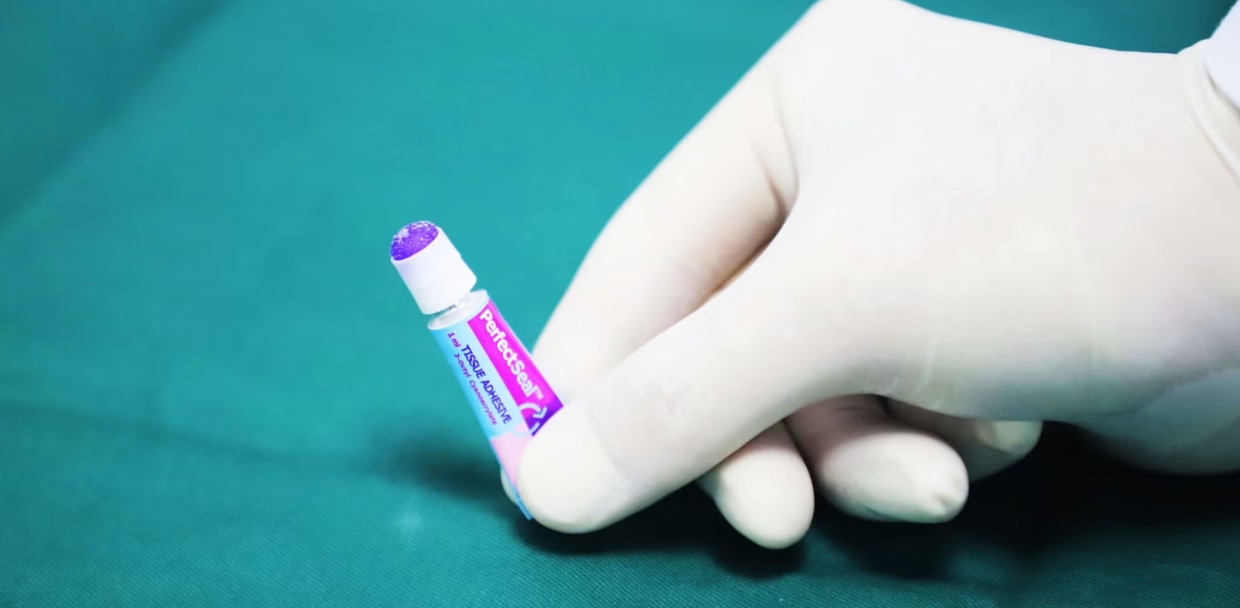
Veterinary clinicians rely on a variety of wound closure options to ensure safe, effective healing following surgery or accidental trauma. Although sutures and staples remain standard tools, many veterinarians now incorporate vet skin glue into their closure techniques because it offers speed, reduced tissue manipulation, and reliable surface protection. This adhesive has become especially helpful for managing low-tension wounds, minor surgical incisions, and situations where minimizing discomfort is essential for both pets and their owners.
As veterinary medicine expands its focus on patient comfort and faster recovery, alternative wound closure methods such as skin adhesives continue to grow in relevance. They provide clinicians with flexible solutions for difficult or sensitive wounds, and they integrate seamlessly into modern veterinary wound care protocols. This comprehensive guide explores how skin glue works, why it is beneficial, and how it supports efficient tissue healing phases across a wide range of clinical settings.
One of the greatest advantages of vet skin glue is its rapid application. Surgical teams can apply a thin adhesive layer within seconds, reducing closure time significantly compared to sutures or staples.
Because the adhesive forms a secure bond almost immediately, animals spend less time under anesthesia, which improves their overall surgical outcome. Faster closure also benefits emergency scenarios where stabilizing the patient quickly is essential.
Traditional suturing involves multiple needle passes through soft tissue, increasing the likelihood of irritation or swelling. Skin adhesives offer an atraumatic method because they bond the skin edges externally, without penetrating tissue.
This reduced handling lowers inflammatory response and supports calmer, smoother recovery, particularly in thin-skinned animals or areas where the tissue is fragile.
Skin glue acts as a natural wound barrier once it solidifies over the incision. This barrier helps protect tissues from debris, external contaminants, and moisture, which is especially important during early wound healing when the skin is vulnerable.
By shielding the wound surface, the adhesive helps maintain a clean environment that encourages healthy epithelial regeneration.
Glue contributes to improved cosmetic healing because it holds skin edges neatly together without leaving puncture marks associated with sutures or staples. The result is a cleaner, more natural appearance.
This is beneficial for facial wounds, thin-skinned areas, and pets whose owners request minimal scarring. The smooth closure also reduces skin tension that can distort healing lines.
One of the practical conveniences of using skin glue is that it requires no removal appointment. The adhesive layer naturally peels away as healing progresses, allowing both the pet and owner to avoid the stress of a return visit solely for suture extraction.
This makes glue particularly appropriate for small animals, anxious pets, or wildlife cases where follow-up restraint may be difficult.
Because skin adhesives require less handling of the wound edges, they reduce exposure to environmental contaminants during closure. The adhesive forms a complete seal over the incision line, helping prevent wound contamination during the vulnerable early healing period.
In busy clinical environments or field work, this protection can significantly lower postoperative infection rates.
Skin adhesives simplify the process of closing surgical or traumatic wounds, allowing teams to maintain efficient workflow. Unlike sutures, which require knot tying and instrument use, or staples that need loading and alignment, glue provides quick and reliable closure with minimal additional tools.
This efficiency helps maintain predictable surgical timelines and reduces the strain on staff during high caseload periods.
Glue closures tend to create less irritation than sutures or staples, which may pull or pinch during movement. By forming a smooth protective layer, adhesive reduces the likelihood of licking, scratching, or discomfort at the wound site.
This encourages pets to leave their incision alone and supports cleaner, safer recovery pathways.
Veterinary surgeons often combine skin glue with tension-relieving techniques to manage more complex closures. Methods such as walking sutures, skin flaps, or skin grafts may reduce tension within deeper layers, allowing glue to serve as a finishing layer that reinforces surface closure.
When used properly, glue complements these approaches and enhances overall wound stability.
Irregularly shaped wounds, curved incisions, or areas where suturing would be time-consuming often benefit from the flexibility of adhesive closure. Glue adapts to contours more easily than sutures and allows clinicians to approximate wound edges quickly without extensive manipulation.
While glue is not suitable for high-tension wounds, it is extremely useful for superficial irregularities or as reinforcement following primary closure.
You can also explore this guide on How To Apply Topical Skin Adhesive For Wound Closure in Animals.
Although highly versatile, skin glue is not appropriate for every wound type. It should be avoided in:
Clinicians must evaluate the wound’s characteristics carefully before deciding whether skin glue is the most appropriate closure method.
Vet skin glue has become an indispensable tool in modern veterinary wound closure. Its ability to reduce trauma, support natural healing, and streamline clinical workflow makes it an excellent choice for a wide range of surgical and traumatic wounds. When combined with proper wound assessment, tension management, and postoperative care, skin adhesives significantly enhance healing outcomes and improve comfort for pets.
Strouden proudly supplies Assut Europe Skin Glue, a high-quality veterinary adhesive designed for efficient, safe, and reliable closure. Its ease of use and consistent performance make it a trusted solution in clinics that prioritize excellent healing results and patient comfort.
Explore Strouden’s range of professional veterinary closure products today and strengthen your wound care capabilities with trusted, clinically proven solutions.
Skin glue forms a strong surface bond that closes the wound edges and protects underlying tissues. As the adhesive layer hardens, it supports natural skin regeneration by maintaining a clean environment that allows epithelial cells to migrate and reconnect efficiently.
Vets choose glue when wounds are shallow, low-tension, and require minimal manipulation. It shortens procedure time, avoids suture removal appointments, reduces trauma, and provides a protective barrier that helps prevent contamination while supporting a comfortable healing experience.
Successful wound healing depends on clean wound management, minimal tension, proper closure, and preventing the animal from licking or scratching the area. Balanced nutrition, appropriate rest, and adherence to veterinary aftercare instructions also play key roles in healing efficiency.
Surgical glue offers rapid closure, reduced tissue trauma, and a natural protective barrier that keeps wounds clean. It eliminates removal visits, improves cosmetic outcomes, and works well with other wound management methods such as tension-relieving sutures or skin flaps.
Skin glue cannot replace sutures in deep or high-tension wounds. Instead, it works best when paired with internal sutures or tension-relieving techniques, supporting surface-level closure and reducing irritation around the skin edges.


