
Contents
Surgical site infections are among the most consequential post-operative complications in veterinary medicine. They prolong recovery, increase treatment costs, cause patient discomfort, and in severe cases can compromise the outcome of an otherwise technically sound surgical procedure. Suture selection is one of the controllable variables that directly influences infection risk, and monofilament polyamide suture occupies an important position in this clinical decision.
Understanding why monofilament polyamide suture reduces infection risk compared to braided alternatives, and how this property translates into better outcomes across different types of surgical sutures and clinical scenarios, gives veterinary professionals a clearer basis for suture selection in infection-sensitive applications.
Polyamide is the chemical classification for the synthetic polymer more commonly known as nylon. When produced as a monofilament, it forms a single continuous strand with a smooth, uniform, sealed surface. This single-strand construction is the defining structural characteristic that underpins the infection-resistance properties of monofilament polyamide suture.
As a member of the non-absorbable types of surgical sutures, polyamide nylon retains its tensile strength over extended periods without undergoing biological degradation during the normal post-operative timeframe. It is removed from external skin closures once adequate wound strength has developed, typically at 10 to 14 days post-operatively.
Polyamide monofilament is distinct from braided polyamide or polyester constructions. While braided sutures of any material present a textured surface with microscopic interstices between filaments, the monofilament form of polyamide presents none of these spaces. This structural difference is the foundation of its superior performance in infection-sensitive surgical environments.
For a broader overview of where polyamide nylon suture fits within the full range of suture options available to veterinary professionals, polyamide nylon suture uses in small and large animal veterinary surgeries provides a comprehensive clinical reference.
To understand why monofilament polyamide suture reduces infection risk, it helps to first understand the mechanism by which braided sutures can contribute to it. The microscopic spaces between the intertwined filaments of a braided suture create capillary pathways through which fluid and bacteria can migrate. This phenomenon, known as bacterial wicking or capillary action, allows microorganisms from the wound surface or external environment to travel along the length of the suture and into deeper tissue layers.
Once bacteria establish themselves within the braided filament interstices, they are physically protected from the host immune system. Neutrophils and macrophages cannot reach bacteria sheltered within the microscopic channels of the suture structure. Systemic antibiotics also have limited penetration into these spaces. This protection allows bacteria to persist, proliferate, and form biofilm within the suture itself, creating a sustained source of infection that does not resolve without suture removal.
A monofilament polyamide suture has no interstices. Its surface is smooth, continuous, and sealed at every point along its length. There are no capillary spaces into which bacteria can migrate, no internal structure where biofilm can establish, and no protected environment where microorganisms can shelter from immune defenses.
This structural difference means that bacteria on or near a monofilament suture are exposed to the full activity of the host immune response and to therapeutic antibiotic concentrations if treatment becomes necessary. Any bacteria that adhere to the smooth surface of a monofilament are far more vulnerable to clearance than those harbored within a braided structure.
This is why monofilament construction is consistently recommended in contaminated wounds, high-risk surgical environments, and any application where infection prevention is a clinical priority. The broader context of this advantage across monofilament suture materials is covered in the advantage of monofilament suture in vet surgical applications.
Veterinary professionals selecting surgical stitches material for infection-sensitive applications typically consider several non-absorbable monofilament options. The following table compares monofilament polyamide against other commonly considered materials across the properties most relevant to infection risk.
Suture Material |
Construction |
Infection Risk |
Tissue Reactivity |
Long-Term Stability |
Primary Application |
| Polyamide nylon | Monofilament | Very low | Low | Moderate | Skin closure, ophthalmics, lacerations |
| Polypropylene | Monofilament | Very low | Very low | High | Cardiovascular, permanent internal repair |
| Silk | Braided | Higher | High | Moderate | Limited modern use |
| Polyester | Braided | Moderate | Moderate | High | Orthopedic, cardiovascular |
| Polyglactin 910 | Braided absorbable | Low to moderate | Moderate | Absorbed 56-70 days | Subcutaneous, internal soft tissue |
| Polydioxanone | Monofilament absorbable | Very low | Low | Absorbed 180-240 days | Fascia, deep tissue, orthopedic |
This comparison confirms that monofilament polyamide occupies a clearly favorable position for infection-sensitive applications that require a non-absorbable suture with removal planned at the appropriate post-operative interval.
Both polyamide and polypropylene are synthetic non-absorbable monofilaments with very low infection risk and minimal tissue reactivity. The key difference is long-term stability. Polypropylene resists biological degradation more completely over extended periods, making it the preferred material for permanent internal repairs such as cardiovascular suture lines. Polyamide undergoes very slow hydrolytic degradation over years, which is clinically insignificant during the post-operative monitoring period for external closures but makes it less suitable for truly permanent internal applications where decades of integrity are required.
For routine skin closure, laceration repair, and other applications where removal is planned, monofilament polyamide is entirely appropriate and is the more widely available and cost-effective option of the two.
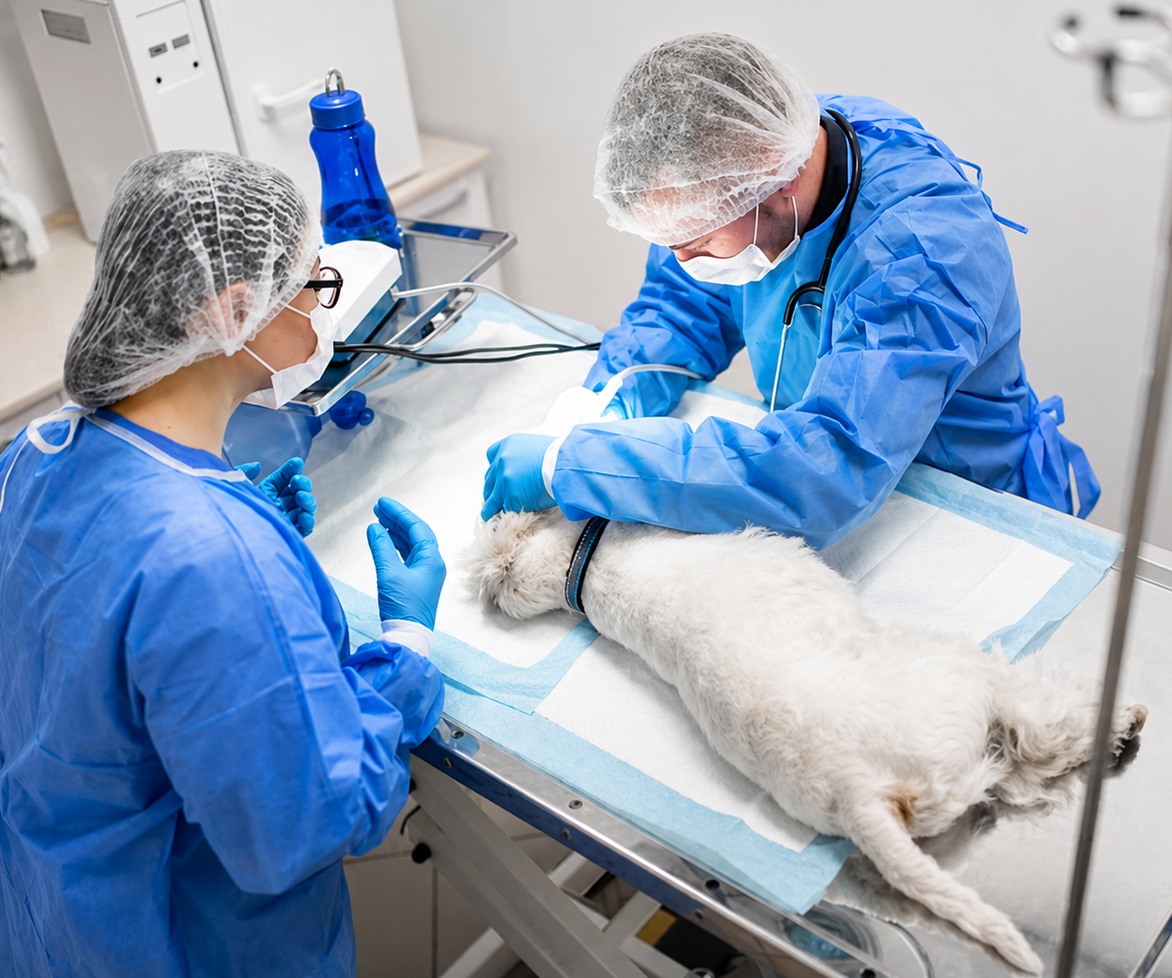
Traumatic lacerations, bite wounds, and wounds sustained in contaminated environments carry a significantly elevated baseline infection risk. Choosing monofilament polyamide suture for skin closure in these cases removes one of the controllable risk factors from the equation. The smooth surface resists colonization by the polymicrobial contaminants commonly present in traumatic wounds, while the suture’s tensile strength provides reliable wound edge apposition through the healing period.
In these wounds, internal layers should also be closed with monofilament absorbable sutures rather than braided alternatives. Polydioxanone for deeper layers and poliglecaprone 25 for subcuticular closure provide the same bacterial wicking resistance as polyamide in the deeper tissue planes. The management of contaminated wounds and suture selection is discussed in common types of suture for laceration used in veterinary surgery.
After gastrointestinal procedures, the surgical field carries a higher-than-normal bacterial burden even when aseptic technique has been meticulous. The skin closure over an abdominal gastrointestinal incision should be performed with a non-wicking suture material. Monofilament polyamide in an interrupted pattern provides reliable skin apposition without contributing a bacterial wicking pathway from the skin surface into the deeper tissue layers.
Dogs receiving immunosuppressive therapy, those with severe systemic disease, and patients in poor nutritional condition have reduced capacity to clear bacteria from wound sites. In these patients, even the modest bacterial wicking associated with braided sutures can result in clinical infections that would have been managed uneventfully by a healthy immune system. Monofilament polyamide suture removes this additional risk factor in patients who are already working at reduced immunological capacity.
Surgical sites following tumor removal or debulking procedures may be subject to tissue compromise from prior radiation therapy, local vascular disruption, or adjacent tissue involvement. These factors reduce local wound defense capacity. Monofilament construction in the skin closure minimizes the infection risk at the surface level while the patient’s compromised tissue environment manages healing internally.
In veterinary ophthalmic surgery, infection risk at the surgical site carries particularly serious consequences including corneal ulceration, endophthalmitis, and permanent vision loss. Fine-gauge monofilament polyamide suture is used for corneal and conjunctival closures specifically because its smooth surface minimizes bacterial adherence in an anatomical location where even minor infections can have devastating outcomes. The precise handling characteristics and low reactivity of polyamide monofilament make it well suited to the fine tissue work of ophthalmic procedures.
Monofilament polyamide has inherent memory, meaning it tends to return toward its original coiled shape after manipulation. This is the primary handling challenge associated with the material and requires deliberate technique to manage. Additional knot throws compared to braided sutures are required to achieve reliable knot security, and maintaining controlled tension during placement requires more active suture management than braided alternatives.
Practitioners who work regularly with monofilament polyamide develop compensating habits that become second nature with experience. Newer graduates benefit from focused practice with the material in lower-stakes applications before using it in complex or high-tension closures.
The smooth surface of monofilament polyamide generates less friction at the knot interface than braided sutures, making it more prone to knot slippage if an inadequate number of throws is used. A minimum of four throws is typically recommended for reliable knot security with monofilament nylon, with some surgeons using five or six throws in high-tension applications.
This requirement for additional throws is the accepted trade-off for the infection resistance and low tissue reactivity that monofilament construction provides. In the context of skin closure, where the suture is external and accessible and where the infection risk benefit is substantial, this handling consideration does not diminish the clinical case for polyamide monofilament.
In ophthalmic and other delicate applications where fine-gauge monofilament polyamide is used, the small diameter of the material requires appropriate needle and instrument selection. Delicate needle holders and fine-tissue forceps are necessary vet instruments for surgery in these contexts to avoid damaging the fine suture material during handling and placement. Using standard-gauge instruments with very fine suture material can crush or weaken the strand, compromising closure integrity.
For guidance on appropriate surgical instrument selection alongside suture choice, understanding veterinary surgical wound closure techniques for better recovery provides broader context on the relationship between instruments and closure outcomes.
Selecting the correct gauge of monofilament polyamide suture follows the same fundamental principle that applies to all types of surgical sutures: use the smallest diameter that provides adequate tensile strength for the tissue and patient.
For cats and small breed dogs, 3-0 to 4-0 is appropriate for most skin closure applications. Medium to large breed dogs typically require 2-0 to 3-0. Large animal applications including equine and bovine skin closure commonly use sizes ranging from 0 to 2. For ophthalmic applications in small animals, gauges from 6-0 to 8-0 are standard.
Using an appropriately fine gauge also contributes to infection risk reduction by minimizing the amount of foreign material in the wound, reducing the inflammatory burden, and leaving smaller puncture sites that heal more quickly and with less scarring. The full framework for suture size selection across species and applications is provided in how to choose suture size for optimal healing and vet care.
The infection resistance of monofilament polyamide suture is only fully realized when the suture arrives at the surgical field in a genuinely sterile condition. Pre-sterilized sutures from reputable manufacturers are supplied with validated sterility assurance, and maintaining this sterility through appropriate storage and handling is an essential responsibility of the veterinary surgical team.
Suture packets should be stored in cool, dry conditions away from heat, moisture, and direct light. Each packet should be visually inspected for packaging integrity before opening. Any compromised packaging should be treated as a contamination event and the suture discarded. Aseptic opening technique should be applied consistently to prevent contamination during transfer to the sterile field.
Detailed guidance on maintaining suture sterility from storage through to use is available in how to sterilize suture material and maintain sterility until the time of use.
Monofilament polyamide suture functions as one component of a comprehensive wound closure strategy rather than as a standalone solution. External skin closure with polyamide monofilament works most effectively when internal tissue layers have been managed with appropriate absorbable sutures, when adequate hemostasis has been achieved, and when dead space has been eliminated through proper layered closure technique.
In cases where skin closure with sutures is supplemented by tissue adhesive for surface sealing, the combination provides both mechanical support and continuous surface barrier protection. The role of veterinary tissue adhesive as a complement to suture closure is discussed when veterinary tissue adhesive is a better option than staples or sutures for pets.
Monofilament polyamide suture reduces infection risk through a clear, mechanistically understood pathway. By eliminating the capillary spaces present in braided suture constructions, it removes the protected environment in which bacteria can establish, proliferate, and resist elimination. This single structural property translates into meaningfully lower surgical site infection rates in applications where contamination risk is elevated, and into a safer suture choice for immunocompromised or systemically compromised patients who cannot afford the additional challenge of a suture-associated infection.
Combined with appropriate surgical technique, correct gauge selection, and rigorous sterility maintenance, monofilament polyamide suture is one of the most reliable tools available for infection risk reduction in veterinary skin closure and selected specialized applications.
Strouden supplies high-quality monofilament polyamide sutures and a full range of veterinary surgical stitches material to support consistent, infection-conscious surgical practice. To explore our product range or discuss the best suture options for your clinical needs, please contact us today.
A: Its smooth, sealed single-strand surface eliminates the capillary spaces found in braided sutures where bacteria can migrate and shelter from immune defenses. This prevents bacterial wicking along the suture line, significantly reducing surgical site infection risk in contaminated or high-risk wound environments.
A: Monofilament polyamide is preferred in contaminated wounds, bite injuries, post-gastrointestinal surgical skin closure, immunocompromised patients, and ophthalmic applications. Any situation where bacterial wicking poses a meaningful infection risk favors monofilament construction over braided suture alternatives.
A: Monofilament polyamide is non-absorbable and requires removal after adequate wound healing, typically at 10 to 14 days for external skin closure. It does not degrade biologically within the normal post-operative timeframe and provides consistent mechanical support until deliberately removed.
A: A minimum of four throws is generally recommended for reliable knot security with monofilament polyamide. Its smooth surface generates less friction at the knot interface than braided sutures, making additional throws necessary to prevent slippage under wound tension.
A: For cats and small breed dogs, 3-0 to 4-0 is appropriate. Medium to large breed dogs typically require 2-0 to 3-0. The smallest adequate gauge providing sufficient tensile strength should always be selected to minimize foreign material load and reduce tissue reaction at the closure site.