
Contents
Every veterinary surgical procedure involves decisions that directly affect patient outcomes, and one of the most fundamental is the choice between braided vs monofilament suture. While both types serve the same basic purpose of holding tissue together during healing, their structural differences translate into meaningfully distinct clinical behaviors. Understanding those differences allows veterinary professionals to select the right material for every tissue type, wound environment, and patient situation they encounter.
This article provides a detailed comparison of braided and monofilament veterinary surgical sutures, examining how each performs across key clinical parameters and outlining the specific contexts in which each type is most appropriate. Whether the procedure involves routine veterinary soft tissue surgery or a more specialized application, this comparison offers a practical framework for informed suture selection.
The distinction between braided and monofilament sutures begins at the level of construction, and that structural difference cascades into nearly every other clinical property.
A monofilament suture is made from a single continuous strand of material. Its surface is smooth and uniform, with no gaps, channels, or interstices. A braided suture, by contrast, is constructed from multiple fine strands twisted or woven together into a single thread. This gives braided sutures a textured, slightly rough surface with microscopic spaces between the individual filaments.
These structural differences affect how each suture interacts with tissue, how easily bacteria can colonize the material, how the suture handles during placement, and how securely knots hold once tied. Understanding each of these interactions in detail is essential for any veterinary professional making suture selection decisions.
For a foundational overview of suture types and their general applications, the guide to the different types of veterinary surgical sutures provides a useful starting point.
One of the most immediate differences between braided vs monofilament suture is how each material passes through tissue during placement.
Monofilament sutures have a low coefficient of friction. Their smooth surface glides through tissue with minimal resistance, reducing the drag and tearing force applied to delicate structures with each needle pass. This is particularly valuable in friable tissues, vascular structures, or any situation where repeated passes are required and cumulative tissue trauma must be kept to a minimum.
Braided sutures, with their textured surface, generate more friction as they pass through tissue. This increased drag can cause additional tearing at each needle entry and exit point, particularly in delicate or inflamed tissues. In healthy, resilient tissue the difference is modest, but in compromised tissue the additional trauma can slow healing or contribute to wound breakdown.
The clinical implication is straightforward. In procedures involving delicate tissues, such as intestinal anastomoses, vascular repairs, or ophthalmic surgery, monofilament sutures are generally preferred to minimize tissue damage during placement. In more robust tissues where handling ease is prioritized, braided sutures remain a practical option.
Perhaps the most clinically significant difference in the braided vs monofilament suture comparison relates to infection risk. This is a critical consideration in veterinary soft tissue surgery, where contamination is a real and ever-present concern.
Braided sutures, by virtue of their construction, contain microscopic spaces between the intertwined filaments. These spaces can act as pathways for bacteria to migrate along the suture line, a phenomenon known as capillary action or bacterial wicking. Once bacteria establish themselves within the suture, they are largely protected from the immune system and from antibiotics, making surgical site infections associated with braided sutures particularly difficult to resolve.
Monofilament sutures, with their solid, seamless surface, do not provide these pathways. Bacteria have far fewer opportunities to adhere to or migrate along the suture, which is why monofilament materials are strongly preferred in contaminated wounds, infected surgical fields, and body cavities with high bacterial load.
This distinction is especially important when closing gastrointestinal, urogenital, or respiratory tissues, where endogenous bacterial populations are high. It also influences the choice of suture for traumatic lacerations and bite wounds in veterinary patients. The infection resistance of monofilament sutures is discussed in detail in the advantage of monofilament suture in vet surgical applications.
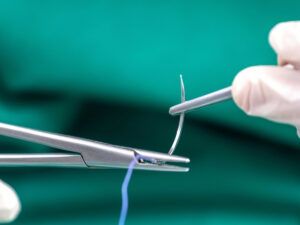
This is the area where braided sutures hold a genuine clinical advantage. The textured surface of a braided suture creates friction between the layers of a tied knot, which helps the knot grip and resist slippage. As a result, braided sutures typically require fewer throws to achieve a secure knot, and the resulting knot is less likely to loosen under tension.
Monofilament sutures, with their smooth surfaces, are more prone to knot slippage if an insufficient number of throws are used. The smooth interface between suture layers means less friction to hold the knot in place. This does not make monofilament sutures unreliable, but it does require practitioners to use additional throws and to develop precise knot-tying techniques to compensate.
For veterinary professionals who perform suture work infrequently or who are still building their technique, the superior knot security of braided sutures can be a meaningful practical advantage. In high-stakes applications such as vascular ligatures or organ pedicle ties, where knot failure can have serious consequences, the security offered by a braided suture is particularly valued.
Both the structural and material composition of a suture influence how the surrounding tissue responds to its presence. In general, braided sutures tend to provoke a slightly greater tissue reaction than monofilament sutures of equivalent material.
The increased surface area of braided sutures means there is more foreign material in contact with tissue. This can trigger a more pronounced inflammatory response as the immune system attempts to process the foreign body. In most healthy animals this reaction is mild and clinically insignificant, but in immunocompromised patients, debilitated animals, or tissues that are already inflamed, the additional reactivity of a braided suture can slow healing or contribute to complications.
Monofilament sutures, with their reduced surface area and often smoother chemical profile, provoke less tissue reaction. This contributes to a calmer healing environment and is one reason monofilament materials are preferred in delicate or sensitive tissue planes.
Natural braided sutures such as chromic catgut provoke the greatest tissue reaction of all because the body recognizes the collagen-based material as a foreign protein and mounts an immune response. Synthetic braided sutures such as polyglactin 910 cause significantly less reaction than natural materials but still more than synthetic monofilaments. The properties of natural absorbable sutures are explored in exploring chromic catgut suture uses in animal soft tissue repair.
Braided sutures are generally more pliable and easier to handle in the surgical field. Their multi-strand construction gives them a softer, more flexible feel that many surgeons find intuitive to work with, particularly when tying knots in confined spaces or when speed of closure is important.
Monofilament sutures are stiffer and have greater memory, meaning they tend to spring back toward their original coiled shape. This can make them more challenging to manage, particularly for practitioners who are less experienced with the material. Extra care is required to maintain controlled tension and consistent knot placement.
Despite this handling difference, the clinical advantages of monofilament sutures in many applications outweigh the ergonomic preferences of the surgeon. Most veterinary professionals who work regularly with monofilament materials adapt their technique over time and find the handling characteristics entirely manageable.
Several of the most commonly used absorbable veterinary surgical sutures are braided in construction.
Polyglactin 910, one of the most widely used absorbable sutures in veterinary medicine, is a braided synthetic material. It offers excellent knot security, good initial tensile strength, and predictable absorption through hydrolysis within 56 to 70 days. It is frequently used for subcutaneous tissue closure, organ pedicle ligation, and general soft tissue approximation where its handling advantages outweigh the modest infection risk of braided construction.
Polyglycolic acid is another braided absorbable suture with a similar absorption profile. Its applications span subcutaneous closure, oral surgery, and urogenital procedures. The common polyglycolic acid suture uses across different vet specialties outlines where this material performs particularly well.
Both of these braided absorbable sutures are appropriate in clean surgical fields where the risk of contamination is low and where the handling advantages of braided construction support efficient, reliable closure.
The absorbable monofilament category includes some of the most clinically versatile materials in veterinary surgery.
Poliglecaprone 25 is a synthetic monofilament absorbable suture known for its excellent pliability relative to other monofilaments. It absorbs within 90 to 120 days and loses tensile strength within one to two weeks, making it well suited to subcuticular skin closure and rapidly healing soft tissues. Its smooth surface and low tissue reactivity make it a preferred choice in infection-sensitive applications.
Polydioxanone provides the longest tensile strength retention of the commonly used absorbable monofilament sutures, maintaining meaningful mechanical support for up to six weeks. It is the material of choice for fascial closure, orthopedic soft tissue repair, and any application requiring prolonged support.
The braided vs monofilament suture distinction extends into non-absorbable materials as well.
Among non-absorbable monofilaments, nylon and polypropylene are the standard choices for external skin closure. Both are smooth, strong, and minimally reactive, and both require removal after adequate wound healing. Their properties in skin closure are discussed extensively in the guide on how to choose the best sutures for skin closure in vet practice.
Among non-absorbable braided sutures, polyester and silk are the most widely recognized. Silk, a natural braided suture, has historically been popular because of its exceptional handling and knot security. However, it provokes a higher tissue reaction than synthetic alternatives and is now used less frequently in internal veterinary applications. Polyester braided sutures are used in specific orthopedic applications and cardiovascular procedures where permanent braided support is required.
In veterinary soft tissue surgery, the braided vs monofilament suture decision is made constantly and across every tissue layer. A practical approach to this decision looks like the following.
For gastrointestinal surgery, monofilament absorbable sutures are preferred at every layer to minimize bacterial wicking in an environment with high luminal bacterial contamination. Poliglecaprone 25 or polydioxanone are appropriate depending on the required support duration.
For subcutaneous tissue closure in clean elective procedures, braided absorbable sutures such as polyglactin 910 are practical and efficient. Their knot security and ease of handling are genuine advantages in this relatively low-risk tissue plane.
For fascial closure, polydioxanone monofilament provides the prolonged tensile strength retention that dense connective tissue requires. Its smooth surface also reduces the risk of complications in the peritoneal environment.
For external skin closure, monofilament non-absorbable sutures are standard. Their resistance to bacterial wicking and smooth tissue passage make them the appropriate choice for the skin surface, where environmental contamination is ever-present.
For ligatures and pedicle ties during procedures such as ovariohysterectomy, braided absorbable sutures offer the knot security needed for reliable hemostasis in a relatively clean surgical field. This practical use case is relevant to many routine veterinary procedures and is one of the most common applications of braided absorbable materials in daily practice.
The overall framework for tissue-specific suture selection is covered in the suture selection guide for different tissue types in animals.
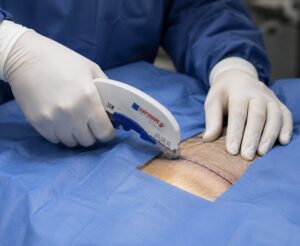
Suture selection does not occur in isolation. In many procedures, the chosen suture material works alongside other closure tools to achieve the best outcome. Topical skin adhesives can be applied over subcuticular suture lines to provide surface sealing and additional contamination protection. Disposable skin staplers offer an efficient skin closure alternative in long incisions.
These complementary options are outlined in how disposable skin stapler use supports faster healing for pets.
Whether braided or monofilament, the quality of the suture material itself matters. Sutures that are inconsistently manufactured, poorly coated, or improperly stored can fail to perform as expected, leading to premature strength loss, knot failure, or increased tissue reaction. Sourcing veterinary surgical sutures from reliable suppliers ensures that clinical decisions about suture type translate into consistent surgical outcomes.
Practices managing procurement can find guidance in the guide to buying wholesale medical supplies.
The comparison of braided vs monofilament suture is not a question of which type is universally better. Each construction has properties that make it more or less appropriate depending on the specific clinical demands of the tissue, the wound environment, and the procedure being performed. Braided sutures offer superior knot security and handling ease, making them a practical choice in clean surgical fields where these properties are prioritized. Monofilament sutures offer reduced bacterial wicking and lower tissue reactivity, making them the better choice in contaminated environments, delicate tissues, and infection-sensitive applications.
By understanding these differences and applying them systematically, veterinary professionals can make suture selections that genuinely support optimal healing for every patient.
Strouden supplies a comprehensive range of both braided and monofilament veterinary surgical sutures to meet the full spectrum of clinical needs in veterinary practice. To explore our product range or discuss the best suture options for your procedures, please contact us today.
A: Braided sutures are made from multiple intertwined strands, offering better knot security and easier handling. Monofilament sutures consist of a single strand with a smooth surface, providing lower infection risk and reduced tissue drag during placement.
A: Monofilament sutures are preferred in contaminated wounds, gastrointestinal surgery, and infection-sensitive environments because their smooth surface resists bacterial wicking. They also cause less tissue trauma during placement in delicate or friable tissues.
A: Yes, braided sutures are safe and widely used in clean surgical fields. They are particularly well suited for subcutaneous closure, ligatures, and pedicle ties in elective procedures where contamination risk is low and knot security is a priority.
A: Generally yes. Braided sutures have greater surface area in contact with tissue, which can provoke a slightly stronger inflammatory response. In most healthy animals this is clinically minor, but monofilament sutures are preferred where minimal tissue reaction is important.
A: Yes. Both constructions are available in absorbable and non-absorbable forms. Polyglactin 910 is a common braided absorbable suture, while polydioxanone is a widely used monofilament absorbable option. The choice between them depends on tissue type, infection risk, and required support duration.