

Contents
Veterinarians increasingly rely on surgical glue, or tissue adhesive, to close select wounds in dogs, cats, and other small animals. This cyanoacrylate-based solution offers a convenient alternative to sutures for low-tension incisions, enabling quicker procedures and smoother recovery in many cases. Understanding how long does surgical glue last is key to managing expectations and maintaining proper wound care throughout the healing process.
Surgical glues are designed to provide temporary wound strength, holding tissue edges together until the body’s natural healing processes can form a strong bond. Their longevity and effectiveness are influenced by several factors, including the specific type of glue used, the wound’s location, the patient’s activity level, and the quality of post-application care.
Veterinary surgical glues are medical-grade cyanoacrylate esters, similar to those used in human medicine. These adhesives polymerize rapidly upon contact with moisture on the skin surface, forming a strong, flexible, and waterproof bond that holds wound edges securely together. This immediate adhesion is one of their primary advantages.
There are different forms of cyanoacrylate used in veterinary medicine, primarily distinguished by their side chains, which influence properties like flexibility, degradation rate, and tissue reaction:
Octyl Cyanoacrylate: This is a longer-chain cyanoacrylate, known for its greater flexibility, lower tissue toxicity, and slower degradation. It forms a stronger, more pliable bond, making it suitable for areas of skin tension or movement.
Butyl Cyanoacrylate: A shorter-chain cyanoacrylate, it polymerizes more quickly and forms a more rigid bond. While still effective, it’s generally more brittle and can cause a slightly higher exothermic reaction (heat release) during polymerization.
Strouden offers specialized topical skin adhesive options formulated for veterinary use, ensuring appropriate adhesion and patient comfort. The choice between these types often depends on the specific surgical site and the veterinarian’s preference, balancing quick adhesion with flexibility and tissue compatibility.
The question of how long does surgical glue last in a clinical setting is complex, as its persistence on the skin is not solely about adhesion but also about its interaction with the healing wound and external factors. Expect surgical glue to remain intact, providing wound support, for approximately 5 to 10 days on average. However, this timeframe is subject to significant variation.
Wounds in areas of high skin tension or frequent movement, such as joints or the neck, may experience earlier detachment of the glue. The constant mechanical stress can compromise the adhesive bond. Conversely, wounds on flatter, less mobile areas tend to hold the glue longer.
Active animals, especially those not adequately restricted post-surgery, can inadvertently rub, lick, or scratch at the glued area, leading to premature removal of the tissue adhesive. Excessive activity can also cause tension on the wound, challenging the glue’s integrity.
The quality of the skin around the wound also plays a role. Oily, dirty, or hairy skin can prevent optimal adhesion. Proper preparation, including cleaning and drying the area, is critical for the glue to bond effectively. Additionally, skin that is particularly thin or fragile may not retain the glue as well.
Correct application is paramount. Applying too much glue can lead to a thick, rigid layer that may crack and peel prematurely. Too little, and the bond might be insufficient. The glue should be applied thinly and evenly to approximated wound edges to form a durable, yet flexible, seal. Ensuring proper wound approximation before applying the vet skin glue is also crucial for its efficacy and longevity.
As the wound heals underneath, the outermost layers of the skin, including the one bonded by the glue, will naturally slough off. This is a normal part of the epidermal turnover. The glue is designed to degrade and shed with these superficial skin cells as the underlying tissue develops sufficient strength to hold itself together. This process typically aligns with the initial phase of wound healing, during which the majority of the tensile strength is regained.
Surgical glue plays a vital, albeit temporary, role in the initial stages of wound healing. It acts as a protective barrier and helps maintain wound edge apposition, which is critical for primary intention healing. It does not provide permanent wound closure; rather, it facilitates the biological processes that lead to lasting tissue repair.
Upon application, the tissue adhesive creates an immediate barrier against contamination, which is beneficial for reducing the risk of infection. It also prevents excessive fluid loss from the wound, contributing to a more favorable healing environment.
The primary goal of surgical glue is to keep wound edges approximated, allowing them to heal by primary intention. This means the wound closes cleanly, minimizing scarring and promoting efficient tissue regeneration. For deeper wounds or those under significant tension, surgical sutures or disposable staples might be used in conjunction with or instead of glue.
Educating pet owners on proper post-operative care is just as important as the surgical procedure itself. Incorrect care can compromise the healing process and lead to premature removal of the surgical glue, impacting how long does surgical glue last effectively.
Animals instinctively try to lick or chew at wounds. This can introduce bacteria, remove the glue, and interfere with healing. An Elizabethan collar (E-collar) is often essential to prevent this behavior. Owners should be instructed on how to properly fit and manage an E-collar, emphasizing its importance throughout the healing period.
The glued area should be kept dry. Bathing or swimming should be avoided until the glue has completely sloughed off. If the area becomes soiled, it should be gently wiped with a damp cloth, avoiding direct scrubbing or harsh chemicals which can dissolve the glue. Understanding how to sterilize medical equipment is useful for clinic staff, but for owners, simple cleanliness of the wound surrounding is key.
Owners should be vigilant for signs of complications such as redness, swelling, discharge, excessive pain, or if the glue starts to lift prematurely. These could indicate infection or an issue with the wound healing. Strouden supports practitioners with high-quality medical supplies to ensure optimal patient outcomes, always emphasizing proactive monitoring.
Ointments, creams, or sprays (unless specifically prescribed by the veterinarian) should be avoided on the glued area. Many topical products contain oils or solvents that can weaken the adhesive bond.
While highly effective for many small incisions, surgical glue is not suitable for all wounds. Veterinarians carefully consider several factors before opting for tissue adhesive.
Surgical glue is generally not recommended for deep, gaping wounds, wounds with significant tension, or wounds that are heavily contaminated. In such cases, appropriate wound closure methods like sutures or staples are necessary to achieve proper apposition of deeper tissue layers and manage infection risk.
As previously mentioned, areas of high movement can challenge the integrity of the glue. For example, surgical sites over major joints or highly mobile skin flaps might be better suited for sutures to provide more durable support through the healing outcomes process.
For animals prone to excessive licking, chewing, or scratching despite E-collar use, more robust closure methods might be preferred to avoid complications related to premature glue removal.
Veterinary medicine offers a range of wound closure options, each with its advantages and disadvantages. Understanding these differences helps in selecting the most appropriate method for each patient, influencing healing time and long-term results.
Sutures, either absorbable or non-absorbable, provide strong, precise closure for various tissue layers. They offer excellent tensile strength and can be used in areas of high tension. Monofilament sutures or multifilament also present distinct characteristics influencing tissue reaction and knot security. However, suture placement takes more time, often requires anesthesia or heavy sedation, and may necessitate a follow-up visit for removal if non-absorbable materials are used. The variety of sutures for veterinary use ensures that veterinarians have many options at their disposal.
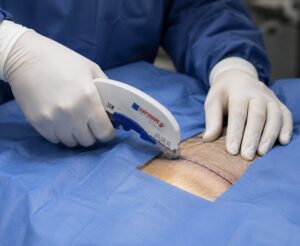
Surgical staples offer a fast and efficient way to close skin incisions, particularly for long, straight cuts. They provide good strength and can be less reactive than some suture materials. Similar to sutures, they often require removal at a later date. Strouden provides disposable skin staplers designed for veterinary applications.
Surgical glue fills a specific niche: quick wound closure for superficial, low-tension wounds in cooperative animals. It reduces procedure time, potential pain, and the need for follow-up visits for removal. This makes it an excellent choice for minor lacerations, surgical biopsies, or for securing drains in place. It’s a testament to the advances in medical supplies that such efficient options are available.
The effectiveness of surgical glue in small animal wound care is undeniable, offering a fast, less invasive option for appropriate cases. Understanding how long does surgical glue last, typically 5 to 10 days, shedding naturally with the healing skin, is fundamental for managing patient expectations and ensuring proper post-operative care. Factors such as wound location, patient activity, and meticulous application all contribute to the longevity and success of the tissue adhesive.
For veterinarians seeking reliable, high-quality wound closure solutions, Strouden offers a comprehensive range of surgical glues, sutures, and staples. We are committed to empowering veterinary professionals with the tools they need for optimal patient care and excellent healing outcomes. To explore our product offerings and discuss how our solutions can benefit your practice, please do not hesitate to contact us. We believe that every clinical setting deserves the right tools to operate safely and efficiently.
A: Surgical glue typically stays on a pet’s skin for about 5 to 10 days before naturally peeling off as the wound heals. The exact duration depends on the type of tissue adhesive used, the wound location, the animal’s activity level, and how well post-operative care instructions are followed.
A: If surgical glue comes off too early, the wound may be at increased risk of reopening, contamination, or infection. Pet owners should contact their veterinarian promptly if the adhesive detaches before healing is sufficient, especially if there is redness, swelling, or discharge.
A: The lifespan of surgical glue cannot be extended beyond its designed duration, but proper care instructions can help it remain effective. Preventing licking or chewing with an E-collar, keeping the area dry, and restricting activity will help the tissue adhesive stay in place for the intended healing period.
A: Surgical glue does not dissolve inside the body. It forms a protective external layer that gradually peels off as the skin heals underneath and superficial skin cells naturally shed.
A: Surgical glue is ready to come off when the edges begin to lift, crack, or flake as the wound gains strength. Owners should allow it to slough off naturally and avoid pulling or picking at the adhesive to prevent wound disruption.